
If you’re considering a career in renewable energy in the UK, you’re entering a dynamic field propelled by the government’s commitment to achieving net zero emissions by 2050 and initiatives like the Boiler Upgrade Scheme.
This sector offers diverse roles in sustainable technologies, from installation to engineering, with a growing demand for skilled workers amid a national skills shortage.
Whether you’re a school leaver, career changer, or tradesperson, targeted qualifications and practical training from providers like Future Group Training can fast-track your entry, particularly in high-demand areas such as air source heat pump systems, leading to fulfilling jobs with strong earning potential.
What Are the Essential Steps to Begin a Career in Renewable Energy in the UK?
The essential steps to begin a career in renewable energy in the UK involve assessing your background, gaining relevant education or training, and building practical experience through apprenticeships or entry-level positions.
Start by evaluating your current skills—if you have a trade background like plumbing or electrical work, you can leverage this for quicker transitions. Pursue foundational qualifications such as a Level 2 or 3 NVQ in related fields, or opt for apprenticeships in green technologies that combine paid work with study. Network via industry events and join professional bodies like the Renewable Energy Association.
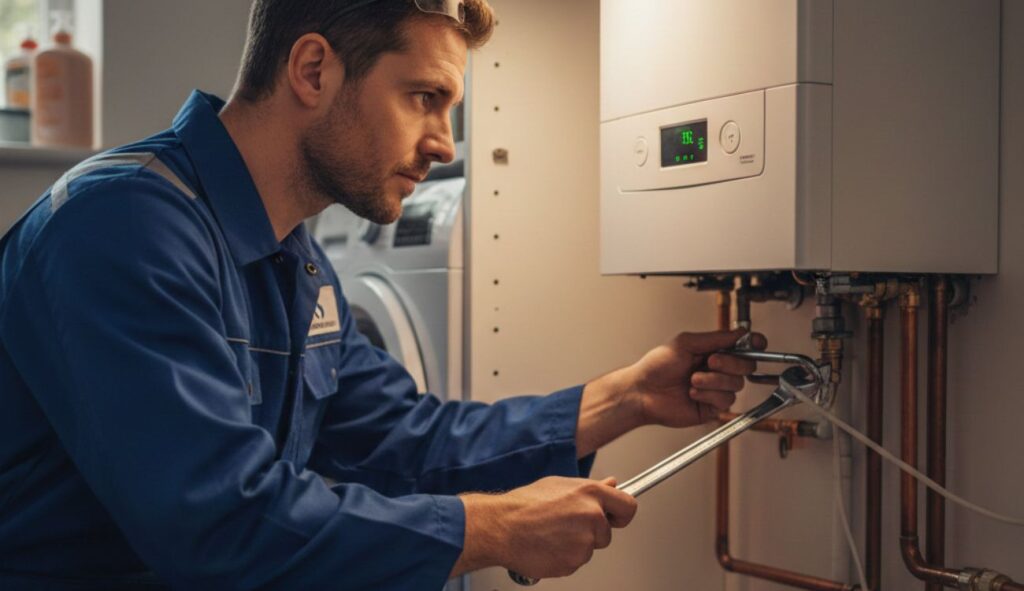
To stand out, enrol in specialised courses that provide hands-on expertise, such as Future Group Training’s BPEC-certified programmes in Newcastle which equip you with the practical skills employers seek and position you for roles contributing to the UK’s sustainable future.
[/vc_column_text][/vc_column][/vc_row]Exploring Entry-Level Pathways
Apprenticeships in solar or wind energy offer structured routes, often lasting 2-4 years, while short courses suit career switchers looking to upskill rapidly without lengthy commitments.
Building a Professional Network
Attend events like the UK Green Building Council conferences or join LinkedIn groups focused on renewables to connect with mentors and discover job openings in this expanding industry.
What Qualifications Do You Need for Renewable Energy Roles?
The qualifications you need for renewable energy roles range from vocational diplomas to specialised certifications, depending on the specific career path you choose. Entry-level positions often require a GCSE or equivalent in maths and science, progressing to NVQs or HNDs in engineering or environmental studies for technical roles.
For installation-focused jobs, accreditations like MCS certification are crucial for compliance and accessing government grants.
Future Group Training’s practical, BPEC-accredited courses, including the 3-Day Domestic Air Source Heat Pump programme at a discounted £654, provide the targeted qualifications that make you eligible for in-demand positions, ensuring you’re ready to install low-carbon systems and advance in a sector offering stability and growth.
[/vc_column_text][/vc_column][/vc_row]Advanced Education Options
Consider degrees in renewable energy engineering from universities like Loughborough or Strathclyde, which open doors to higher-level roles, or stackable micro-credentials for flexible learning.
Skill Development for Success
Key skills include technical proficiency, problem-solving, and knowledge of regulations—honed through hands-on training that Future Group Training emphasises in their workshops.
What Career Paths Are Available in Renewable Energy?
The career paths available in renewable energy encompass installation, engineering, consulting, and project management, each contributing to the UK’s transition to sustainable power sources.
From hands-on roles maintaining wind turbines to strategic positions advising on energy efficiency, opportunities abound in solar, wind, biomass, and heat pump technologies.
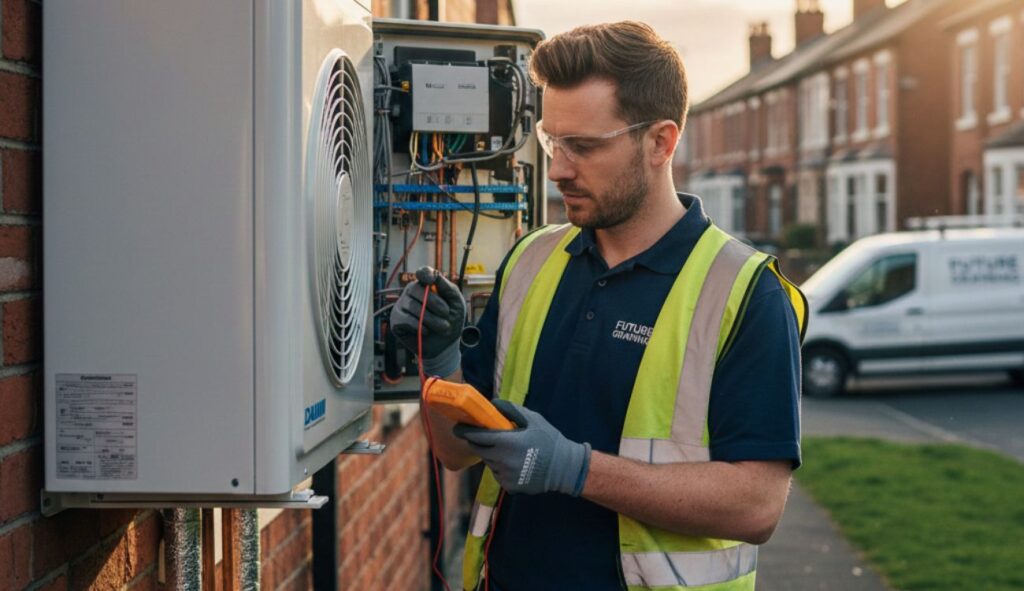
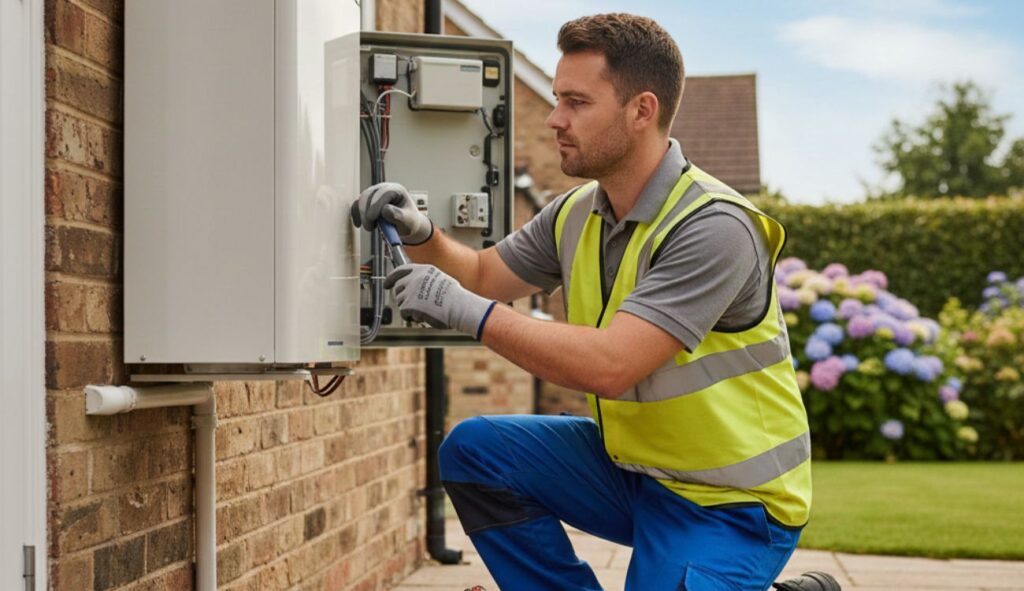
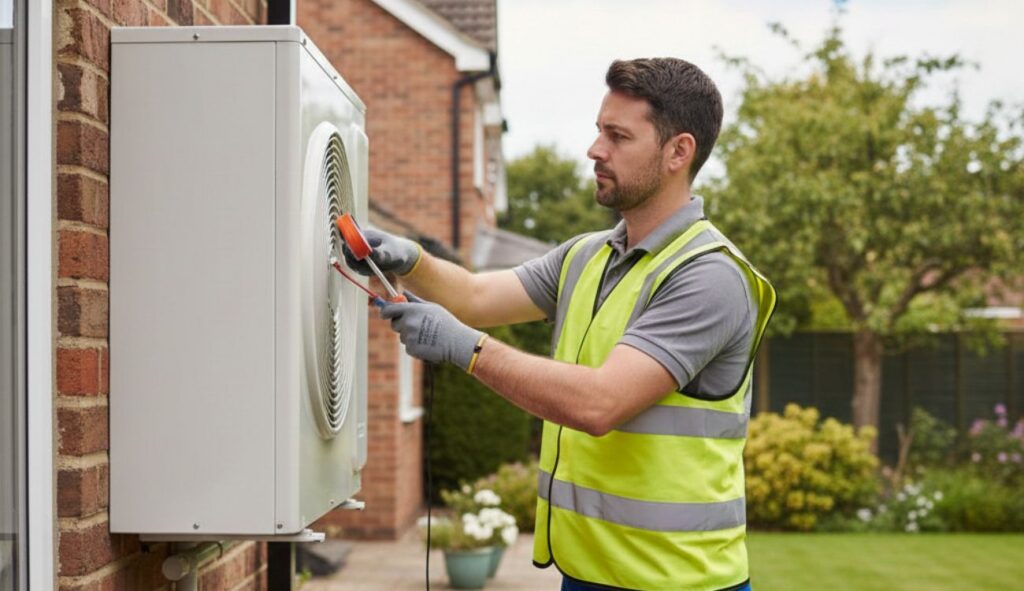
Among these, air source heat pump installation stands out as an accessible entry point for tradespeople, with rapid training leading to immediate job prospects amid a severe installer shortage.
To give you a clearer picture of potential earnings, here’s a table of estimated salary figures for key roles in the UK renewable energy industry, based on 2025 data:
| Job Title | Average Salary Range (GBP) |
|---|---|
| Air Source Heat Pump Installer | £40,000 – £60,000 (up to £75,000 for experienced) |
| Solar PV Installer | £30,000 – £45,000 |
| Wind Turbine Technician | £30,000 – £50,000 |
| Renewable Energy Consultant | £35,000 – £60,000 |
| Renewable Energy Project Manager | £50,000 – £85,000 |
| Biomass Engineer | £35,000 – £55,000 |
These figures highlight the competitive pay in renewables, with heat pump roles offering particularly strong potential due to government targets for 600,000 annual installations by 2028.
Future Group Training’s courses, like the 2-Day Low Temperature Hot Water Heating Systems at £474, prepare you specifically for these lucrative paths, blending theory with practical application to boost your employability.
[/vc_column_text][/vc_column][/vc_row]Transitioning from Traditional Trades
If you’re in gas engineering or plumbing, pivoting to renewables is straightforward, with short upskilling courses aligning your existing expertise to green technologies.
Emerging Roles in the Sector
Look into niches like energy storage specialists or smart grid technicians, which are gaining traction as the UK integrates more intermittent renewables.
How Can Training Programmes Help You Enter the Field?
Training programmes can help you enter the field by providing targeted, industry-recognised skills that bridge the gap between aspiration and employment in renewables. Short, intensive courses focus on practical competencies, such as system design and installation, making you job-ready faster than traditional routes.
Future Group Training excels here with their hands-on, BPEC-certified offerings in the North East, including the 1-Day Domestic Hot Water Storage Systems (Unvented) G3 course for £288, which not only meets entry requirements but also connects you to a network of employers seeking certified professionals for net zero projects.
[/vc_column_text][/vc_column][/vc_row]Selecting the Right Provider
Choose accredited centres with modern facilities and experienced tutors to ensure your training translates to real-world success and certifications like MCS.
Combining Training with Work Experience
Many programmes include placement opportunities, allowing you to apply new skills immediately and build a portfolio for future applications.
Why Is Air Source Heat Pump Installation a Smart Career Choice in Renewables?
Air source heat pump installation is a smart career choice in renewables because it addresses a critical need in the UK’s decarbonisation efforts, offering quick entry and high job security.
With demand soaring due to policies phasing out fossil fuel boilers, this role allows for rapid upskilling and potential earnings up to £75,000. Future Group Training’s specialised courses in Newcastle provide the BPEC qualifications needed to excel, empowering you to install efficient systems that reduce household emissions while enjoying a rewarding, future-proof profession—enrol today to secure your spot in this vital sector.
[/vc_column_text][/vc_column][/vc_row]Benefits of Specialisation
Focusing on heat pumps enables diversification, such as hybrid systems, expanding your service offerings and client base in a competitive market.
Long-Term Growth Prospects
As expertise grows, advance to supervisory or consultancy roles, with ongoing CPD ensuring you stay ahead in evolving technologies.
FAQs
What apprenticeships are available for renewable energy starters?
Options include Level 3 apprenticeships in sustainable energy through providers like the Energy & Utilities Skills Partnership, combining on-the-job training with college study over 18-24 months.
How do regional differences affect renewable job availability in the UK?
Scotland and the North East boast more wind-focused roles due to offshore farms, while the South East sees higher solar and consulting opportunities linked to urban development.
What soft skills are valued in renewable energy careers?
Employers prioritise communication for client interactions, teamwork for project delivery, and adaptability to handle evolving regulations and technologies.
Can international qualifications transfer to UK renewable roles?
Yes, through bodies like ENIC for equivalence assessment, often requiring top-up training to meet local standards like Building Regulations.
What resources help with job hunting in renewables?
Platforms like GreenJobs.co.uk and the RenewableUK jobs board list vacancies, with CV tailoring tips emphasising sustainability experience.
[/vc_column_text]