
If you’re wondering how to retrain for a trade job, you’re likely a mid-career professional, recent school leaver, or someone seeking stability in hands-on work amid economic shifts, with trades offering job security and earnings often exceeding office roles.
In the UK, where demand for skilled tradespeople surges due to construction booms and net zero targets, retraining can be straightforward through apprenticeships, short courses, or vocational qualifications.
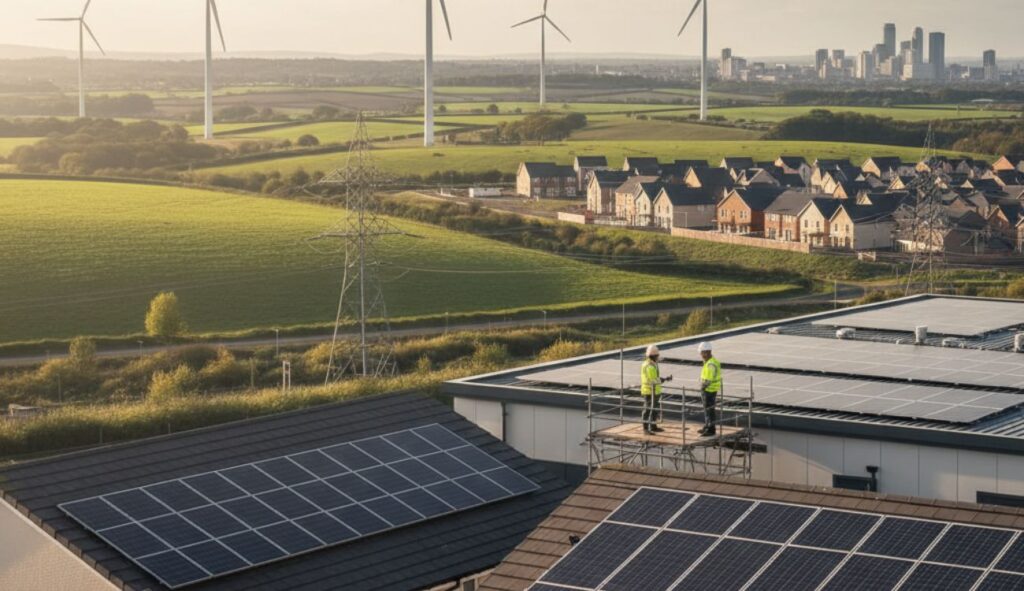
Future Group Training provides an excellent entry point with BPEC-certified heat pump courses, enabling quick transitions into renewable heating—a sector facing acute installer shortages and salaries up to £75,000.
What Steps Should You Take to Retrain for a Trade Job?
The steps you should take to retrain for a trade job start with identifying your interests and assessing transferable skills, such as manual dexterity from hobbies or prior jobs, before selecting a high-demand field like plumbing, electrical work, or renewable energy installation.
Next, explore training options: apprenticeships for those 16 and over not in full-time education, combining paid work with qualifications; college diplomas like NVQ Level 2/3; or intensive short courses for faster entry.
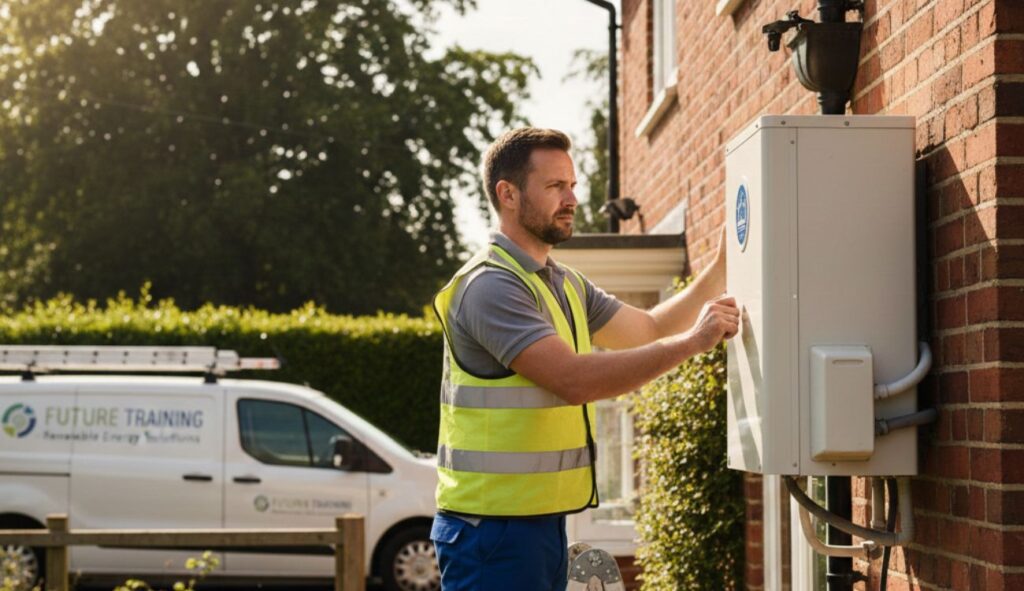
Gain practical experience through on-the-job placements, and finally, obtain certifications for compliance and employability. Future Group Training accelerates this process with hands-on programmes in Newcastle, such as the 3-Day Domestic Air Source Heat Pump Course at £654 (with discounts), equipping you for immediate roles in sustainable heating systems.
[/vc_column_text][/vc_column][/vc_row]Assessing Your Skills and Choosing a Trade
Evaluate strengths via online quizzes or career advice from Prospects.ac.uk, focusing on in-demand areas where your background aligns, minimising retraining time.
Building Experience Post-Training
Seek entry-level positions or volunteer work; Future Group Training’s practical workshops simulate professional environments, enhancing your CV for quick job placement.
[/vc_column_text][/vc_column][/vc_row]What Are the Best Trade Jobs to Retrain For in the UK?
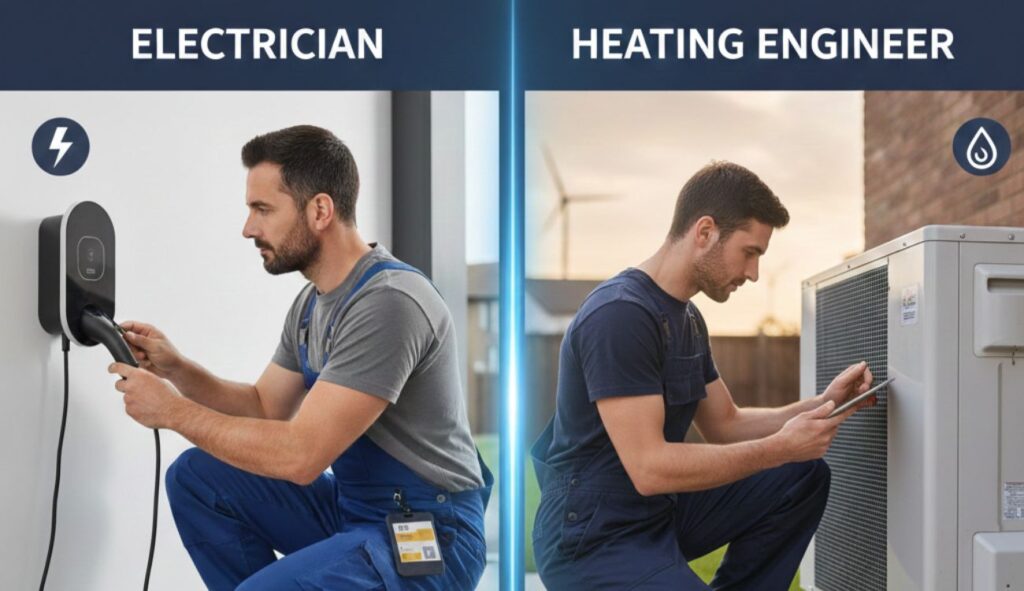
The best trade jobs to retrain for in the UK include electrician, plumber, carpenter, and heating engineer, with renewable roles like heat pump installer rising due to projected 4% growth by 2026 and government green initiatives creating 400,000 jobs by 2030.
These offer stability amid skills shortages. To illustrate earning potential, here’s a table of average UK salaries for top trades in 2026:
| Trade Job | Average Salary (GBP) | Projected Growth by 2026 |
|---|---|---|
| Electrician | £47,265 | +4% |
| Plumber | £45,000 | +3% |
| Carpenter & Joiner | £40,000 | +2% |
| Heating & Ventilation Engineer | £42,000 | +5% |
| Heat Pump Installer | £40,000 – £75,000 | High (due to net zero) |
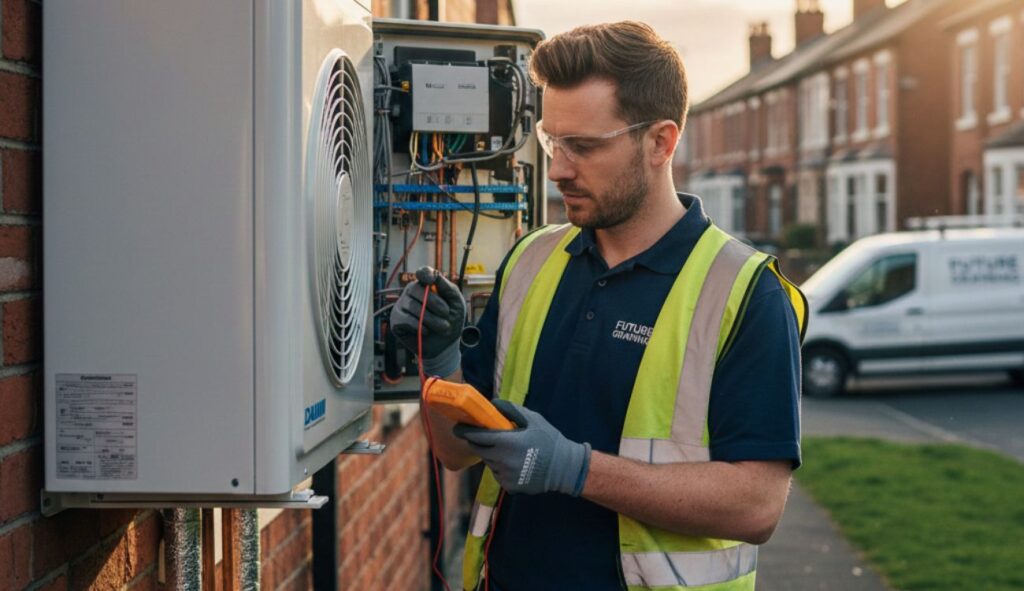
Heat pump installation stands out for quick retraining and high demand. Future Group Training’s BPEC-accredited 2-Day Low Temperature Hot Water Heating Systems Course at £474 prepares you effectively, opening doors to grant-eligible projects under the Boiler Upgrade Scheme.
[/vc_column_text][/vc_column][/vc_row]Factors for Choosing a Trade
Consider demand, training duration (often 2-4 years for apprenticeships, shorter for courses), and personal fit—renewables like air source systems appeal for eco-impact and future-proofing.
Emerging Opportunities in Green Trades
With UK aiming for 600,000 annual heat pump installs by 2028, specialising here via Future Group Training ensures you’re at the forefront of the clean energy boom.
What Qualifications Do You Need to Retrain for a Trade Job?
The qualifications you need to retrain for a trade job typically include NVQ Level 2 or 3 in your chosen field, such as plumbing or heating, which demonstrate work-based competence and can be achieved through apprenticeships or college.
For regulated trades, add certifications like Gas Safe for engineers or MCS for renewables. No prior quals are often required to start, making it accessible for adults. Future Group Training offers targeted BPEC credentials, including the 1-Day Domestic Hot Water Storage Systems (Unvented) G3 Course at £288, fulfilling Building Regulations and paving the way for MCS accreditation in heat pump work.
[/vc_column_text][/vc_column][/vc_row]Entry-Level vs Advanced Qualifications
Begin with Level 2 diplomas for basics, progressing to Level 3 for full competency; blended online options suit working adults.
Trade-Specific Certifications
For heating, G3 unvented and water regulations are essential—Future Group Training integrates these into practical training for seamless compliance.
[/vc_column_text][/vc_column][/vc_row]How Can You Fund Your Retraining for a Trade Job?
You can fund your retraining for a trade job through government schemes like free Level 3 qualifications for adults 19+, Skills Bootcamps (backed by £34 million for career progression), or Adult Skills Fund via local providers.
Other options include CITB grants for construction, bursaries from City & Guilds Foundation up to £1,500, or King’s Trust awards for 16-30s covering training costs. Apprenticeships provide paid training.
Future Group Training’s discounted courses make entry affordable, with Heat Training Grants up to £500 for heat pump modules, reducing barriers to high-paying renewable careers.
[/vc_column_text][/vc_column][/vc_row]Exploring Government and Employer Support
Check GOV.UK for apprenticeships or Skills Funding Agency for eligibility—many employers sponsor upskilling in shortage areas like renewables.
Private Funding and Bursaries
Organisations like Thomas Wall Trust offer grants for vocational training, ideal for over-50s or those in financial need.
Why Is Retraining for a Trade Job a Smart Career Move?
Retraining for a trade job is a smart career move because it leads to secure, well-paid roles in a market facing labour shortages, with tradespeople earning above the national average and enjoying flexibility like self-employment.
Amid UK economic shifts, trades resist automation and offer purpose through tangible results. Future Group Training empowers this transition with expert-led, practical courses tied to net zero goals, helping you become a certified heat pump installer ready to meet surging demand and contribute to sustainable futures—enrol today for a rewarding path.
[/vc_column_text][/vc_column][/vc_row]Benefits for Career Changers
Mid-life switchers benefit from shorter courses, leveraging life experience for faster progression and higher initial pay.
Long-Term Job Security
With projections of sustained growth, especially in green trades, retraining ensures resilience against economic downturns.
FAQs
What age is too old to retrain for a trade job in the UK?
No upper age limit exists; many succeed in their 40s or 50s via short courses, with funding like Skills Bootcamps supporting mature learners for fulfilling second careers.
How long does it take to fully qualify in a trade after retraining?
Apprenticeships span 2-4 years, but intensive courses can qualify you in weeks to months for entry-level work, with ongoing experience building full expertise.
Can I retrain for a trade job while working full-time?
Yes, through part-time college, online blended learning, or evening courses, allowing you to maintain income during the transition.
What soft skills are essential for success in trade jobs?
Communication for client interactions, problem-solving for on-site challenges, and time management for project efficiency enhance employability beyond technical abilities.
How do trade jobs contribute to personal work-life balance?
Many offer flexible hours, self-employment options, and local work, reducing commutes and allowing more family time compared to office-based roles.
[/vc_column_text]