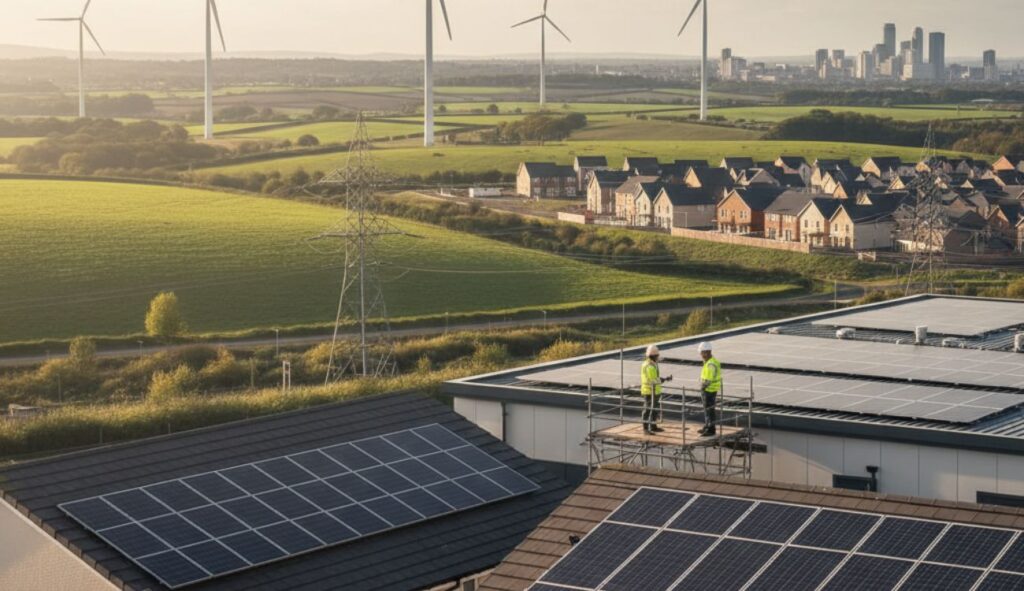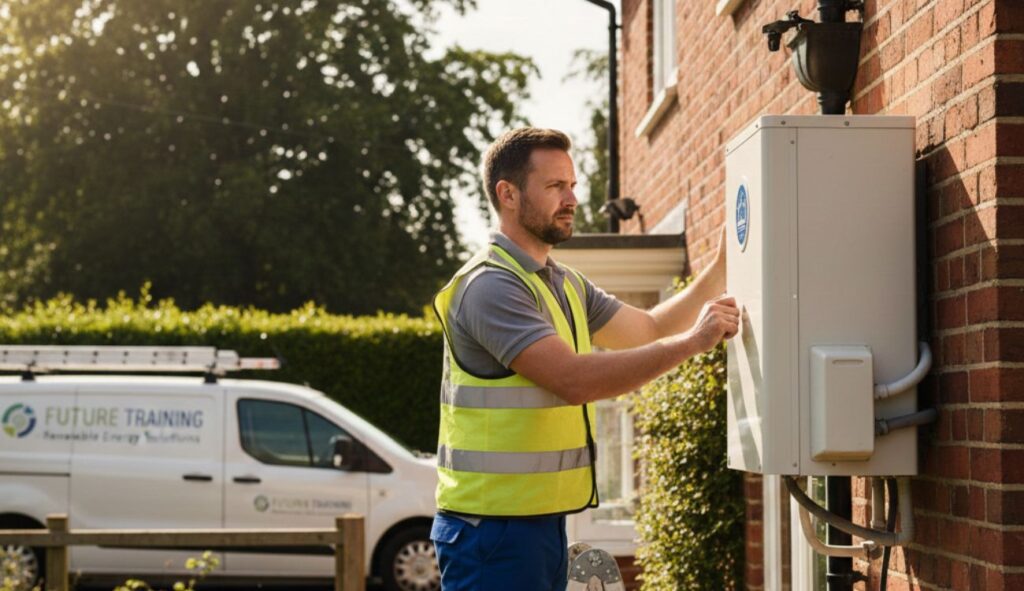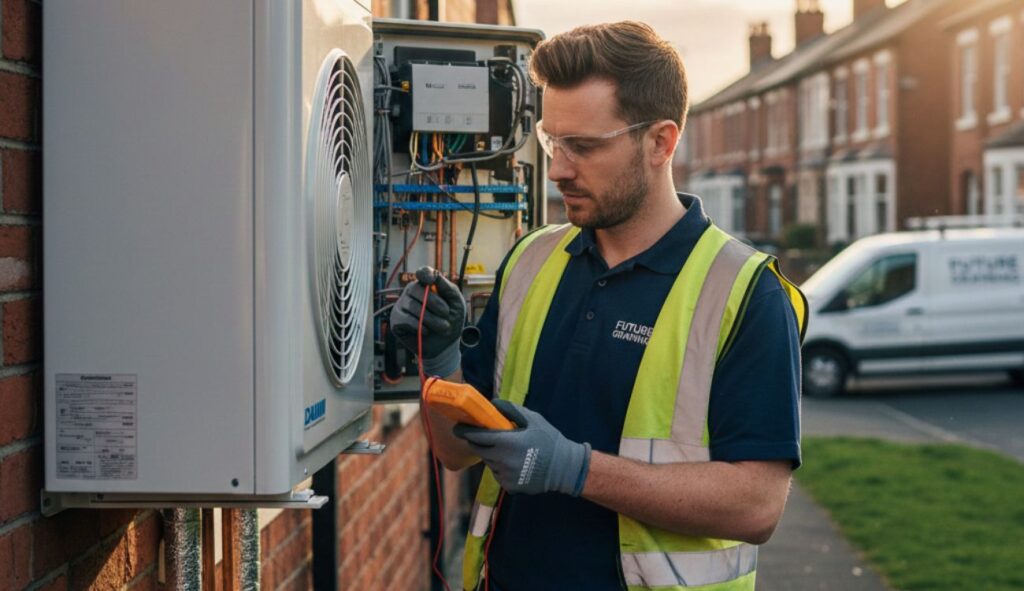

If you’re wondering how to become a heat pump installer in the UK, you’re tapping into a booming sector driven by the nation’s commitment to net zero emissions by 2050. With a critical shortage of skilled professionals and potential earnings reaching up to £75,000 annually, this career path offers stability, growth, and the chance to contribute to eco-friendly heating solutions.
Whether you’re new to the trade or transitioning from roles like gas boiler engineering or electrical work, specialised training from providers like Future Group Training can equip you with the expertise needed to thrive.
What Steps Should You Follow to Become a Heat Pump Installer in the UK?
The steps to become a heat pump installer in the UK begin with assessing your current skills and obtaining foundational qualifications in plumbing, heating, or related fields.
If you’re starting fresh, pursue a Level 2 or 3 NVQ Diploma in Plumbing and Domestic Heating or an equivalent apprenticeship, which typically takes 2-4 years and covers essential topics like pipework, safety regulations, and system installation.
Next, complete specialised heat pump training, such as a BPEC or LCL Awards Level 3 Award in the Installation and Maintenance of Air Source Heat Pumps, which focuses on design, commissioning, and fault-finding for low-carbon systems.
To access government incentives like the Boiler Upgrade Scheme, aim for Microgeneration Certification Scheme (MCS) accreditation, requiring proof of competence, public liability insurance, and registration with a certification body like NICEIC or NAPIT.
Finally, gain practical experience through on-the-job placements or by joining a certified company. Enrolling in Future Group Training’s hands-on courses in Newcastle accelerates this process, providing BPEC-certified skills that make you job-ready and eligible for high-paying roles in the renewable energy industry.
[/vc_column_text][/vc_column][/vc_row]
Essential Prerequisites for Beginners
For those entering the trade without prior experience, start with basic qualifications like the City & Guilds Level 2 Diploma in Plumbing Studies, which builds foundational knowledge in water systems and heating principles. This sets the stage for advanced heat pump modules, ensuring you’re prepared for the practical demands of installation work.
Building Practical Experience
Hands-on practice is crucial, so seek apprenticeships or entry-level positions with heating firms. Future Group Training’s practical workshops simulate real-world scenarios, helping you master air source heat pump setups and boosting your confidence for independent projects.
[/vc_column_text][/vc_column][/vc_row]
What Qualifications Are Required for Heat Pump Installation?
The qualifications required for heat pump installation include a combination of core trade certifications and specialised renewable energy credentials to ensure compliance and competence.
Essential ones are a Level 2 or 3 NVQ in Plumbing, Heating and Ventilating, or Gas Installation and Maintenance, which demonstrate proficiency in domestic heating systems. Additionally, you must hold the Water Supply (Water Fittings) Regulations certificate and, for unvented systems, the G3 Building Regulations qualification for safe hot water storage handling.
For heat pumps specifically, a recognised award like the BPEC Domestic Air Source Heat Pump Systems course is vital, covering low-temperature heating integration. To become MCS certified—a must for grant-eligible installs—you’ll need these plus evidence of a quality management system.
Future Group Training offers these exact BPEC-accredited courses, including the 3-day Domestic Air Source Heat Pump programme at a discounted £654, making it straightforward and affordable to gain the qualifications that open doors to lucrative opportunities in the UK’s green heating market.
Additional Certifications for Compliance
Beyond basics, consider the Low Temperature Hot Water Heating Systems qualification, which Future Group Training delivers in a 2-day format for £474, ensuring your installations meet energy efficiency standards and Building Regulations.
Pathways to MCS Accreditation
Achieving MCS status involves submitting your qualifications to a certification body and passing an on-site assessment. By completing Future Group Training’s suite of courses, you’ll have the documented expertise to streamline this process and start installing systems that qualify for government funding.
[/vc_column_text][/vc_column][/vc_row]
How Can You Transition from Other Trades to Heat Pump Installation?
You can transition from other trades to heat pump installation by leveraging your existing skills and adding targeted upskilling in renewable technologies.
If you’re a gas boiler engineer, your ACS Gas qualifications provide a strong base, requiring only additional training in heat pump specifics like system design and electrical integration.
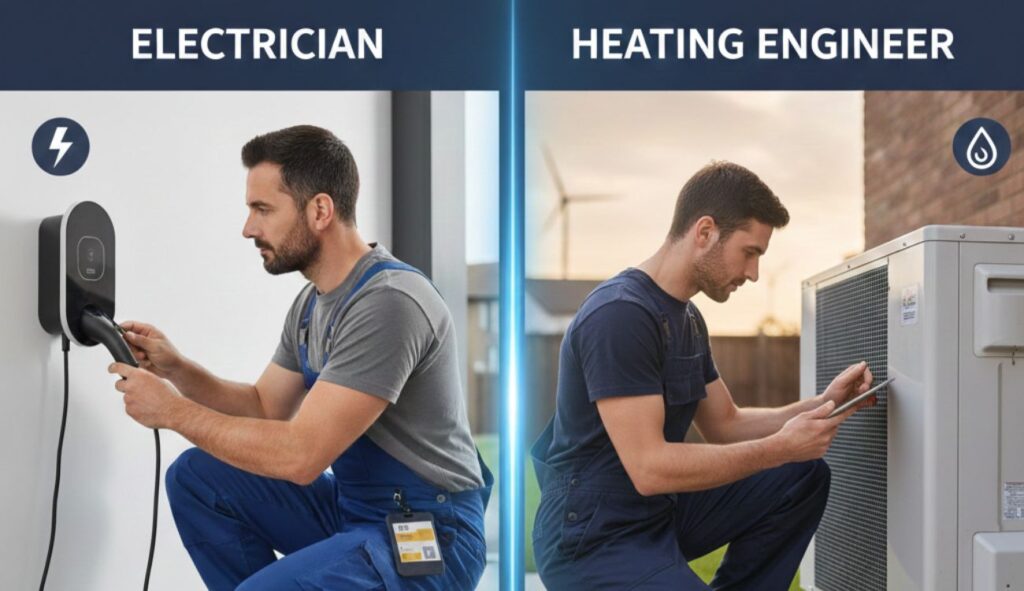
Electricians can build on their 18th Edition Wiring Regulations knowledge by focusing on heat pump controls and power requirements. Plumbers transition easily by adding unvented hot water and low-temperature system expertise.
A typical path involves a short, intensive course to bridge the gap, followed by MCS registration.
Future Group Training specialises in supporting such career shifts with their practical, BPEC-certified programmes, like the 1-day Domestic Hot Water Storage Systems (Unvented) G3 course for £288, helping you quickly adapt and capitalise on the installer shortage for earnings potential up to £75,000.
[/vc_column_text][/vc_column][/vc_row]
Tailored Advice for Gas Engineers
Gas engineers can fast-track by enrolling in heat pump courses that align with their combustion knowledge, converting it to low-carbon applications. Future Group Training’s 3-day ASHP course is ideal, offering hands-on training that directly translates to new job prospects.
Opportunities for Electricians and Plumbers
Electricians benefit from modules on heat pump electrics, while plumbers focus on hydraulic systems. Both can enrol in Future Group Training’s discounted bundles to gain comprehensive skills, positioning them as versatile installers in a high-demand field.
Why Is Now the Ideal Time to Train as a Heat Pump Installer?
Now is the ideal time to train as a heat pump installer due to the UK’s ambitious net zero targets, including scaling up to 600,000 annual installations by 2028 from just 60,000 recently.
This surge creates a massive skills gap, with thousands of new roles needed in renewable heating. Government initiatives like the Boiler Upgrade Scheme provide grants up to £7,500, boosting demand for certified professionals.
With average salaries climbing amid the shortage, training now secures a future-proof career. Future Group Training’s expert-led courses in the North East equip you with the tools to meet this demand, offering practical experience and certifications that lead to immediate employment in sustainable energy.
Government Incentives and Market Growth
Policies like the Clean Heat Market Mechanism encourage heat pump adoption, increasing job opportunities. By training with Future Group Training, you’ll be ready to install systems eligible for these incentives, enhancing your professional value.
Long-Term Career Benefits
Beyond immediate jobs, this field offers progression to roles like system designer or consultant, with ongoing CPD. Future Group Training’s network connects you to nationwide opportunities, supporting a rewarding, high-wage path in green technology.
[/vc_column_text][/vc_column][/vc_row]
FAQs
What funding options are available for heat pump training in the UK?
Government grants through the Heat Training Grant scheme can cover up to £500 towards approved courses, while some employers offer sponsorships for upskilling. Check with Skills Funding Agency for eligibility based on your region and background.
How long does it typically take to complete an apprenticeship in heat pump-related fields?
A full apprenticeship in plumbing or heating engineering usually spans 3-4 years, including on-the-job training and college modules, with heat pump specialisation added in the final stages for comprehensive preparation.
What tools and equipment will I need to start working as a heat pump installer?
Essential items include manifold gauges, vacuum pumps, torque wrenches, and electrical testers. Many training providers like Future Group Training introduce these during courses, and starter kits can be purchased post-qualification for around £500-£1,000.
Are there any age restrictions for entering heat pump installation training?
No formal age limits exist, but apprenticeships often target 16-24-year-olds for funding perks. Mature learners frequently succeed in short courses, bringing transferable skills from prior careers.
How does heat pump installation contribute to personal carbon footprint reduction?
By specialising in efficient systems, installers help households cut emissions by up to 70% compared to gas boilers, while personally adopting renewable tech at home amplifies individual environmental impact.
[/vc_column_text]