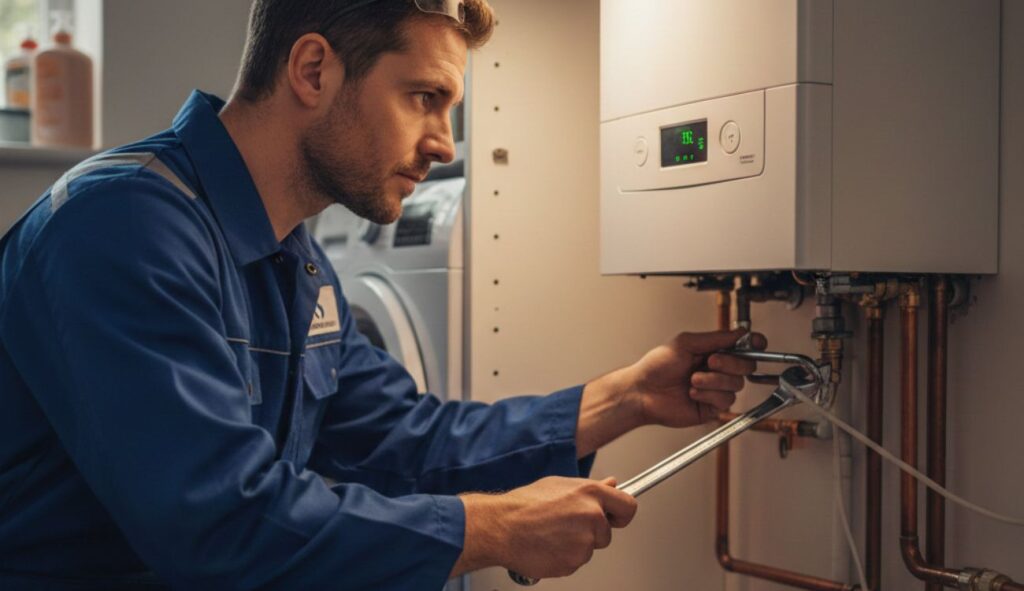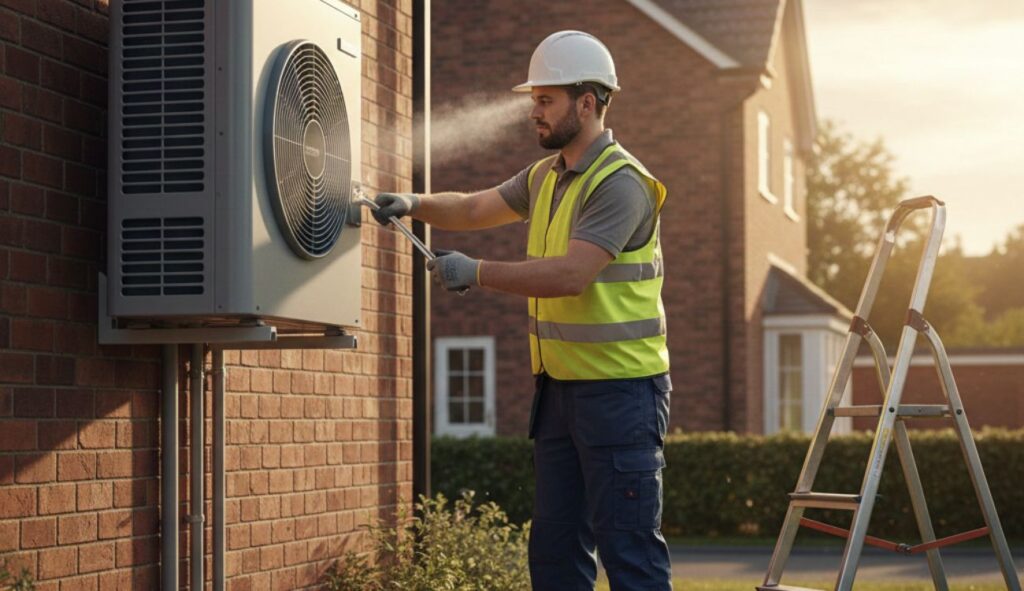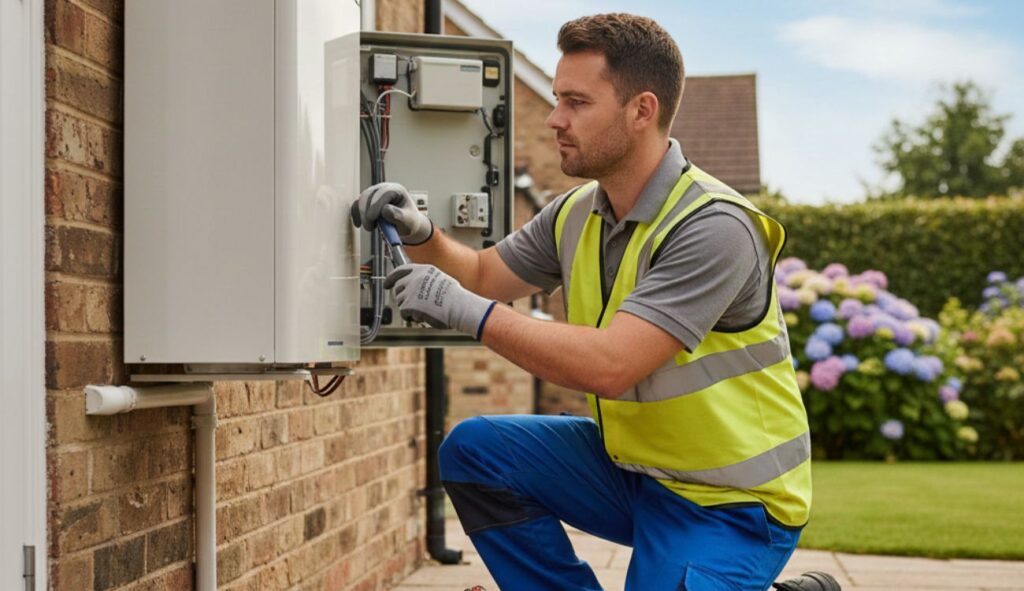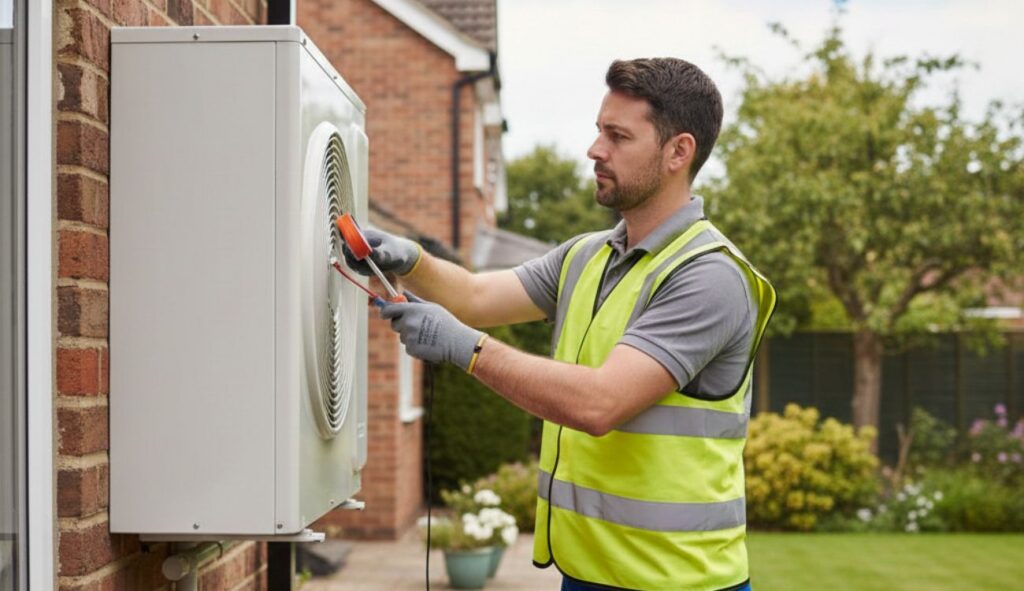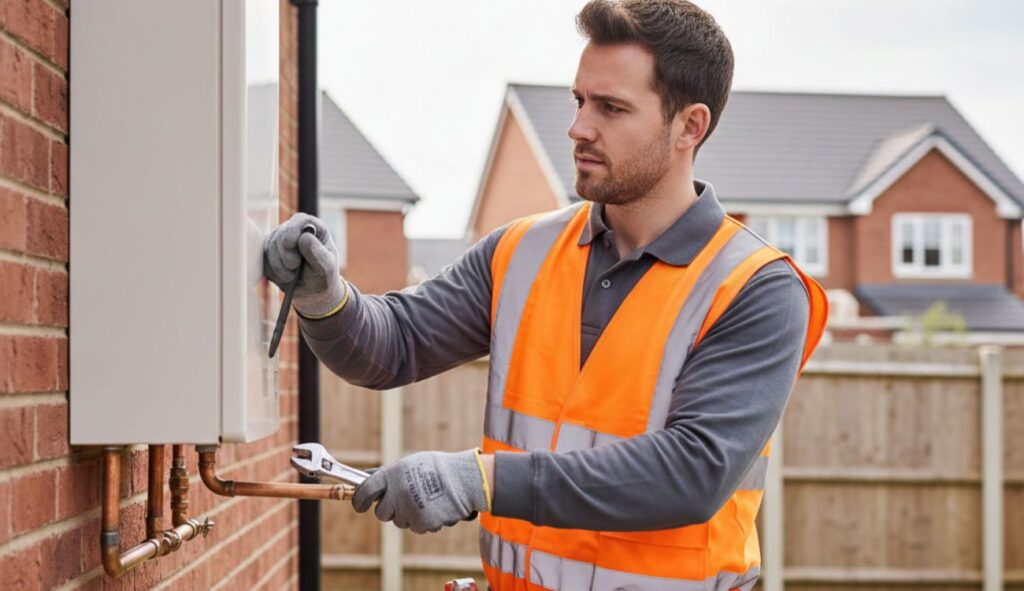

If you’re a gas engineer wondering if you can install heat pumps, the answer is yes—with targeted additional training that builds directly on your existing plumbing and heating expertise.
Your Gas Safe registration and wet central heating experience provide an ideal foundation for upskilling into air source heat pump systems, a sector booming towards the UK’s target of 600,000 annual installations by 2028.
Future Group Training’s BPEC-certified courses offer the perfect bridge, delivering practical skills to confidently install efficient, low-carbon systems and access high-demand opportunities with earning potential up to £75,000.
Can Gas Engineers Directly Install Heat Pumps Without Further Training?
Gas engineers can directly install heat pumps without further training only for basic private work, but specialised qualifications are essential for compliant, professional installations—especially those eligible for the £7,500 Boiler Upgrade Scheme.
Your core skills in pipework, controls, and domestic heating translate seamlessly to non-refrigerant heat pump circuits, yet recognised training ensures safe commissioning, fault-finding, and system optimisation.
Future Group Training’s hands-on BPEC programmes, like the 3-Day Domestic Air Source Heat Pump Course at a discounted £654 in Newcastle, builds on your background to deliver job-ready expertise quickly and affordably.
[/vc_column_text][/vc_column][/vc_row]Leveraging Existing Gas Safe Skills
Gas Safe-registered engineers often meet entry requirements for heat pump courses, accelerating the path to adding renewables without redundant foundational study.
Compliance with Building Regulations
All installations must adhere to Part G (unvented systems) and Part L (energy efficiency); Future Group Training integrates these into practical sessions for seamless adherence.
[/vc_column_text][/vc_column][/vc_row]What Training Do Gas Engineers Need to Install Heat Pumps Professionally?
Gas engineers need training to install heat pumps professionally, typically a Level 3 award in air source systems plus supporting modules like low-temperature heating and unvented hot water storage. BPEC or LCL Awards qualifications focus on design, installation, and maintenance of non-refrigerant circuits, recognised towards MCS accreditation.
Future Group Training provides exactly these accredited options, including the 2-Day Low Temperature Hot Water Heating Systems Course for £474 and the 1-Day Domestic Hot Water Storage Systems (Unvented) G3 at £288, with current discounts up to 15%—ideal for transitioning while maintaining your gas work.
[/vc_column_text][/vc_column][/vc_row]Recommended Course Pathway
Start with G3 if needed, add low-temperature expertise, then complete the core ASHP module; Future Group Training’s bundled, intensive format minimises downtime.
Accessing the Heat Training Grant
Eligible engineers can claim up to £500 rebates on approved courses until at least March 2026, further reducing costs for Future Group Training’s programmes.
[/vc_column_text][/vc_column][/vc_row]Is MCS Certification Required for Gas Engineers Installing Heat Pumps?
MCS certification is required for gas engineers installing heat pumps under the Boiler Upgrade Scheme, ensuring grant eligibility and consumer protection standards. While not mandatory for all private installs, MCS status unlocks the majority of market opportunities amid surging demand.
Your prior NVQ Level 2/3 and experience count towards requirements under MCS 025. Future Group Training’s BPEC courses supply the documented competencies needed for straightforward registration with bodies like NICEIC, empowering you to deliver incentive-qualified projects.
[/vc_column_text][/vc_column][/vc_row]Routes to MCS Accreditation
Opt for install-only (with design subcontract) or full design/install; Future Group Training prepares you for both, streamlining assessments.
Benefits of MCS for Transitioning Engineers
Certification enhances credibility, listings in directories, and access to higher-volume, funded work in the installer-shortage market.
Why Should Gas Engineers Retrain to Install Heat Pumps Now?
Gas engineers should retrain to install heat pumps now to future-proof careers amid net zero policies, capitalise on the skills gap, and achieve earnings often £7,000–£10,000 higher annually. With record installations continuing into 2026 and beyond, demand far exceeds supply.
Future Group Training’s expert-led, practical courses in the North East equip you rapidly for this shift, blending your expertise with renewable proficiency to thrive in sustainable heating—enrol today to lead in the green transition.
[/vc_column_text][/vc_column][/vc_row]Diversifying Service Offerings
Add heat pumps alongside gas work for hybrid flexibility, increasing client retention and revenue streams.
Contributing to Sustainability
Install efficient systems reducing emissions, aligning with national goals while enjoying purposeful, high-security roles.
FAQs
How do monobloc versus split heat pumps affect training needs for gas engineers?
Monobloc units require no F-Gas handling, suiting standard plumbing-focused courses, while splits may need additional refrigerant certification for full independence.
What electrical considerations arise when gas engineers install heat pumps?
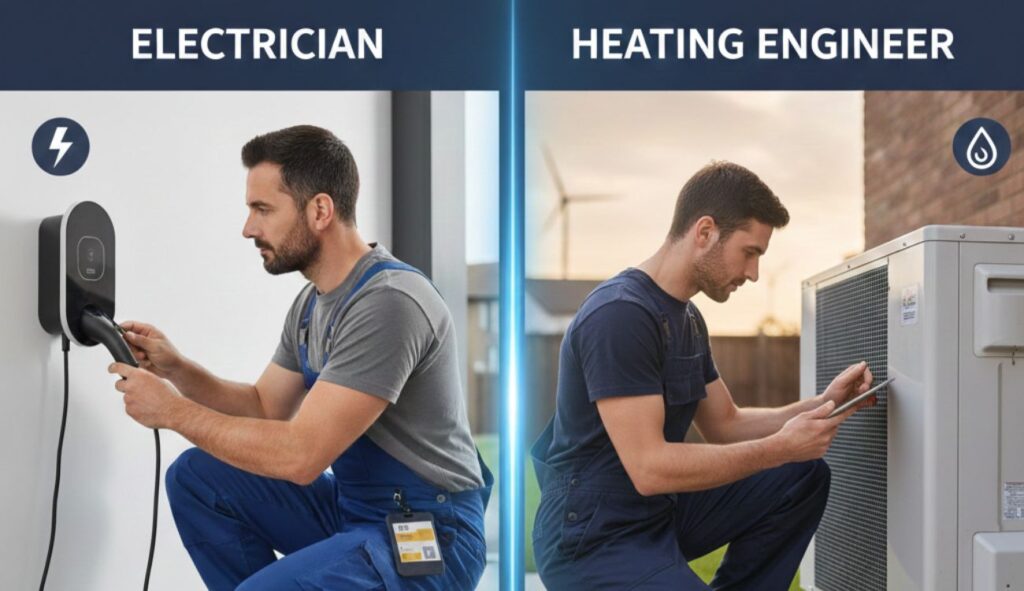
Systems often integrate with existing wiring, but training covers controls and power requirements; separate electrician input is needed for major upgrades.
Can gas engineers claim VAT relief on heat pump installations?
Zero-rated VAT applies to energy-saving materials until 2027, benefiting clients and making your services more competitive.
How does manufacturer training complement general qualifications?
Brand-specific sessions provide product warranties, advanced features knowledge, and preferred installer status for ongoing support.
What portfolio building tips help new heat pump installers post-training?
Document initial supervised projects thoroughly, seek mentorship, and use umbrella schemes for early MCS-eligible experience.
[/vc_column_text]