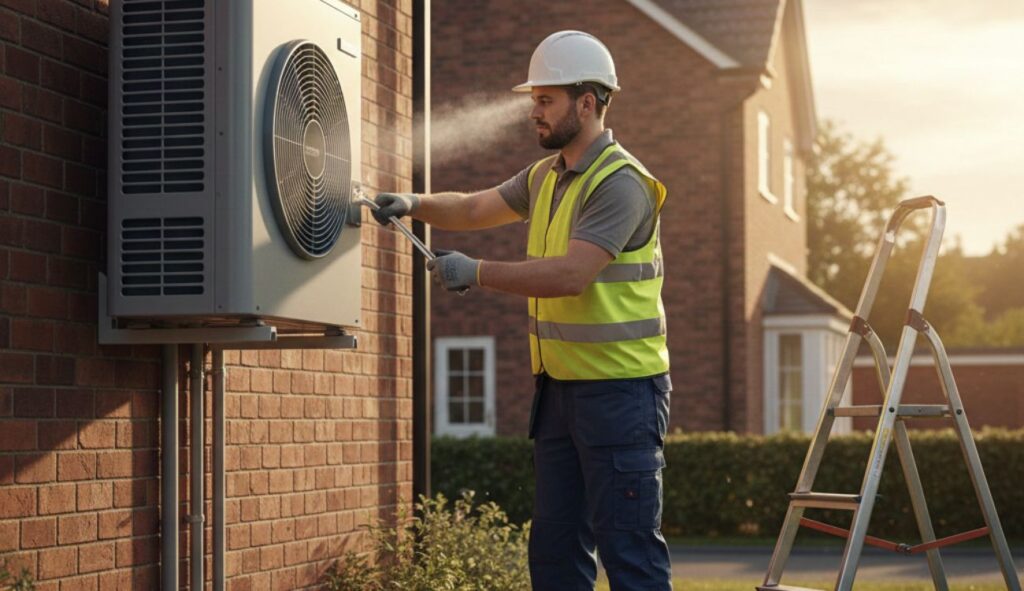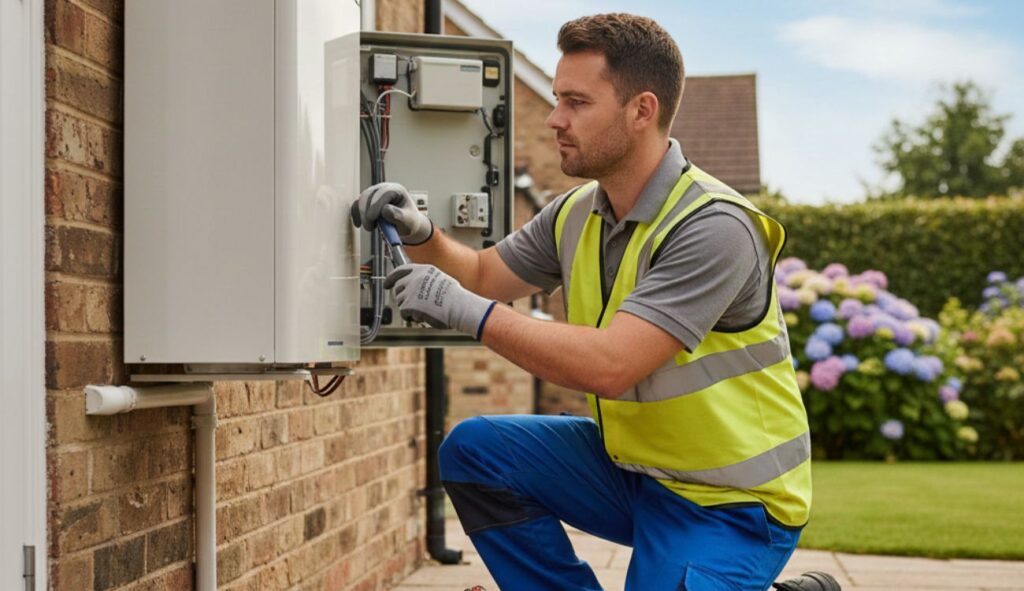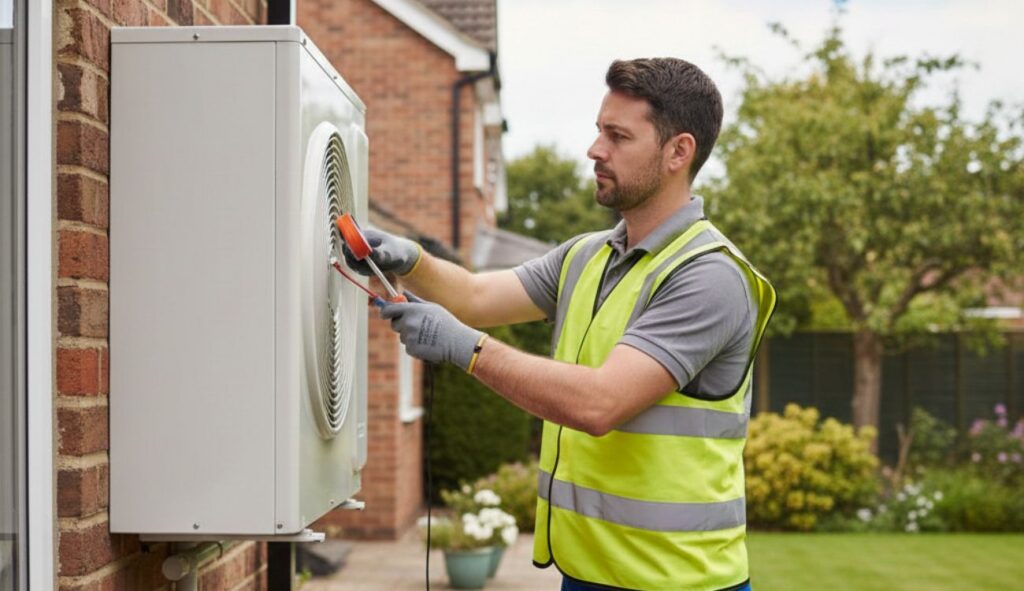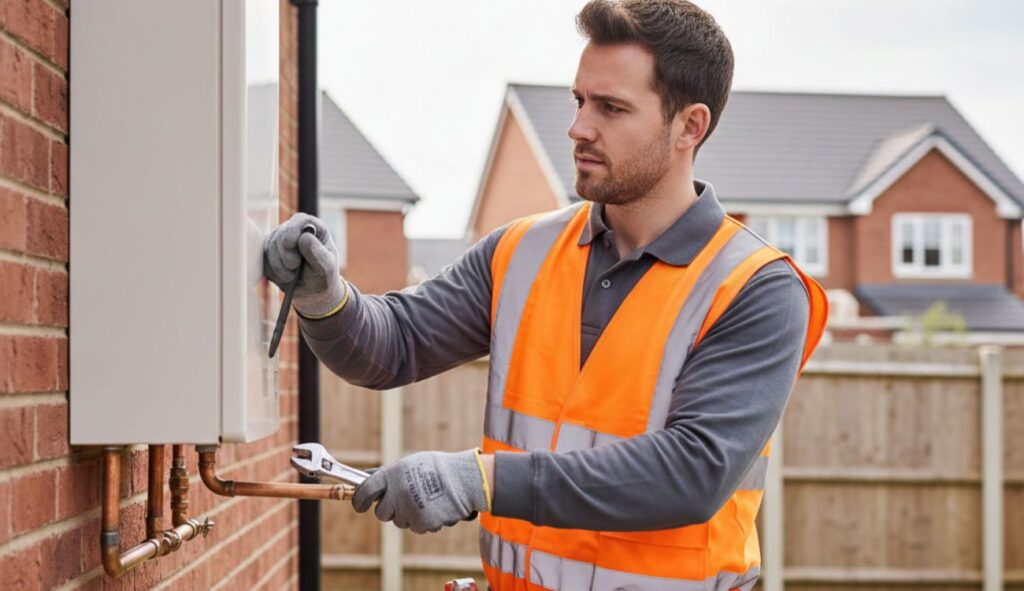

The answer depends on your goals—while it’s not a strict legal requirement for all installations, MCS certification is essential for accessing government grants like the £7,500 Boiler Upgrade Scheme and building client trust in a competitive market.
With the UK’s push towards 600,000 annual heat pump installations by 2028 amid net zero targets, certified professionals are in high demand.
Future Group Training’s BPEC-accredited courses provide the foundational qualifications that pave the way to MCS registration, equipping installers and engineers with practical skills for compliant, high-quality work.
Do I Need MCS Registration for All Heat Pump Installations?
You do not need MCS registration for all heat pump installations, as there is no blanket legal mandate requiring it for private, non-grant-funded work in the UK. However, MCS certification ensures installations meet rigorous quality standards for design, commissioning, and performance, giving clients assurance of efficiency and safety.
For most professional installers, achieving MCS status through recognised qualifications is highly recommended to remain competitive.
Future Group Training’s hands-on BPEC courses, such as the 3-Day Domestic Air Source Heat Pump programme at a discounted £654 in Newcastle, deliver the exact competencies needed to progress towards MCS accreditation and handle real-world domestic systems confidently.
[/vc_column_text][/vc_column][/vc_row]Legal vs Practical Requirements
Technically, anyone with appropriate plumbing qualifications can install heat pumps without MCS for off-grid or self-funded projects, but compliance with Building Regulations and Part G (unvented systems) remains mandatory.
Client Expectations and Market Demand
Homeowners increasingly seek MCS-certified installers for peace of mind; Future Group Training’s practical training bridges this gap, preparing you for seamless MCS pathways.
[/vc_column_text][/vc_column][/vc_row]Is MCS Registration Required for the Boiler Upgrade Scheme?
MCS registration is required for the Boiler Upgrade Scheme, as installations must be carried out by a certified installer to qualify for the £7,500 grant towards air source or ground source heat pumps.
Ofgem administers the scheme, mandating MCS (or approved equivalent, currently none) to ensure high standards and consumer protection. Without it, clients cannot access this vital funding, limiting your project opportunities.
Future Group Training’s BPEC-accredited suite—including the 2-Day Low Temperature Hot Water Heating Systems course for £474—provides the core awards recognised en route to MCS, enabling you to offer grant-eligible services and boost your business in the growing low-carbon sector.
[/vc_column_text][/vc_column][/vc_row]How MCS Supports Grant Applications
Certified installers generate the necessary compliance certificates post-commissioning, streamlining voucher redemption and enhancing project viability.
Alternatives for Non-Grant Work
For private installations, focus on quality training; Future Group Training’s programmes ensure your work meets industry benchmarks even without immediate MCS.
[/vc_column_text][/vc_column][/vc_row]How Can I Achieve MCS Certification as a Heat Pump Installer?
You can achieve MCS certification as a heat pump installer by holding relevant qualifications like a Level 3 award in heat pump systems, demonstrating competence through assessments, and registering your business with an approved certification body such as NICEIC or NAPIT.
Prerequisites often include NVQ Level 2/3 in plumbing/heating, Water Regulations, and G3 unvented certification. Future Group Training specialises in these building blocks with their 1-Day Domestic Hot Water Storage Systems (Unvented) G3 course at £288, plus intensive hands-on workshops in the North East, making the path to full MCS straightforward and supporting transitions from gas engineering to renewables.
[/vc_column_text][/vc_column][/vc_row]Step-by-Step Certification Process
Compile evidence of training, insurance, and quality systems, then undergo on-site audits—Future Group Training’s BPEC certificates provide robust proof of skills.
Umbrella Schemes for Faster Entry
Many start via MCS umbrella providers for initial projects, gaining experience while building towards independent certification.
Why Pursue MCS Registration Even If Not Strictly Required?
You should pursue MCS registration even if not strictly required because it unlocks higher-volume work, builds professional credibility, and aligns with the installer shortage driving salaries up to £75,000 for experienced specialists.
It also future-proofs your career amid evolving regulations favouring certified low-carbon installations.
Enrolling in Future Group Training’s discounted, practical courses positions you to meet these standards efficiently, connecting you to opportunities in sustainable heating and contributing to national decarbonisation goals.
[/vc_column_text][/vc_column][/vc_row]Competitive Edge in the Market
MCS-listed installers appear in official directories, attracting more enquiries in a sector short of qualified professionals.
Long-Term Career Benefits
Certification opens doors to ongoing work, manufacturer partnerships, and progression in renewable technologies.
FAQs
What insurance do MCS-registered heat pump installers typically need?
Public liability coverage of at least £2 million is standard, often with professional indemnity added for design elements, available through specialist renewable brokers.
How often must MCS certification be renewed or assessed?
Annual office audits and periodic on-site assessments occur, typically every 12-18 months, to maintain standards and compliance.
Can MCS certification cover multiple renewable technologies?
Yes, many installers extend to solar PV or biomass, allowing diversified services under one registration for broader opportunities.
What happens if a heat pump installation fails MCS standards?
Remedial work is required, with potential suspension if issues persist; robust training minimises risks from the outset.
Are there regional differences in MCS application across the UK?
Core standards are UK-wide, but schemes like Home Energy Scotland may have additional grant-specific nuances outside England and Wales.
[/vc_column_text]