
If you’re a gas engineer looking to switch from gas to heat pump installer in the UK, now is the perfect moment to upskill amid surging demand for low-carbon heating systems.
With the government’s ambition to reach 600,000 heat pump installations annually by 2028 and grants like the £7,500 Boiler Upgrade Scheme driving adoption, transitioning opens doors to a thriving sector.
Your existing plumbing and heating expertise provides a strong foundation, and targeted training from providers like Future Group Training can quickly equip you with BPEC-certified skills for air source heat pump installation, leading to rewarding roles in sustainable energy.
How Can Gas Engineers Effectively Switch to Heat Pump Installation?
Gas engineers can effectively switch to heat pump installation by building on their current qualifications and completing specialised renewable training courses. Your Gas Safe registration and experience with wet central heating systems already meet many entry requirements for heat pump programmes, allowing a smooth transition without starting from scratch.
Focus on gaining a recognised Level 3 award in air source heat pump systems, which covers design, installation, commissioning, and maintenance of low-temperature setups.
Future Group Training offers the ideal pathway with their BPEC-certified Domestic Air Source Heat Pump 3-Day Course, priced at £654 with current discounts, delivered through hands-on sessions in Newcastle to make you confident and competent in real-world applications.
[/vc_column_text][/vc_column][/vc_row]Leveraging Existing Gas Qualifications
Your ACS credentials and knowledge of boiler systems translate directly to heat pump hydraulics and controls, reducing the learning curve. Pair this with complementary courses like Future Group Training’s Low Temperature Hot Water Heating Systems 2-Day Course for £474 to master energy-efficient distribution essential for optimal heat pump performance.
Gaining Practical Hands-On Experience
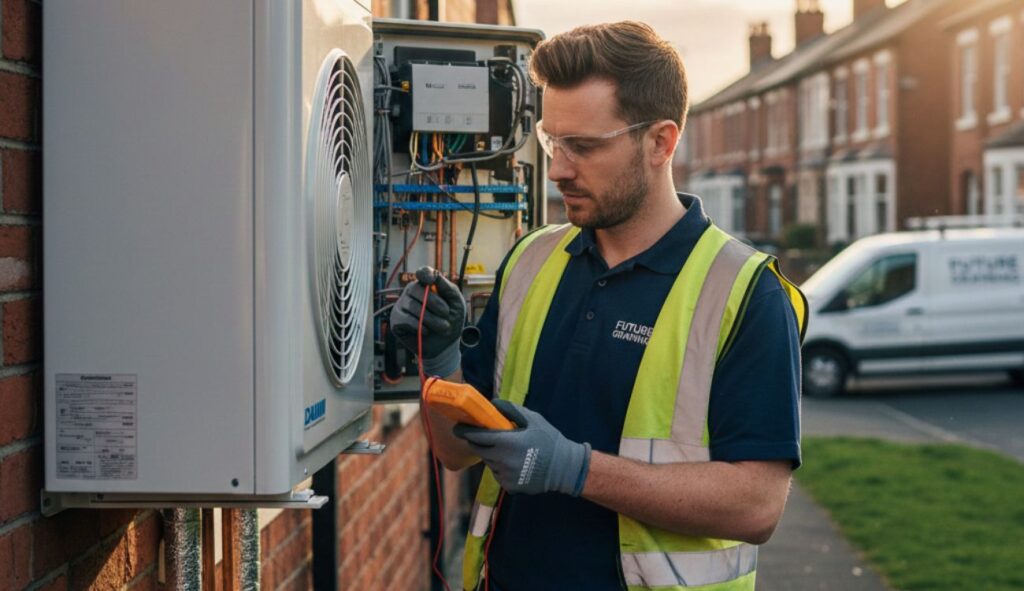
Practical training bridges the gap from gas to renewables. Future Group Training’s workshops simulate domestic installations, ensuring you gain the fault-finding and commissioning skills employers seek, accelerating your ability to deliver MCS-eligible projects.
[/vc_column_text][/vc_column][/vc_row]What Training Courses Are Essential for Switching from Gas to Heat Pumps?
The essential training courses for switching from gas to heat pumps include a core air source heat pump qualification plus supporting modules on unvented systems and low-temperature heating.
As an experienced gas engineer, you’ll typically need the BPEC or equivalent Level 3 Award in Installation and Maintenance of Air Source Heat Pumps (non-refrigerant circuits), often combined with Water Regulations and G3 unvented hot water certification if not already held.
These ensure compliance with Building Regulations and prepare you for MCS accreditation. Future Group Training provides exactly these BPEC-accredited options, including the 3-day ASHP course, 2-day LTHW programme, and 1-day G3 unvented course at £288, all with practical focus and discounts up to 15% to make your transition affordable and efficient.
[/vc_column_text][/vc_column][/vc_row]Recommended Course Sequence
Start with the Domestic Hot Water Storage Systems (Unvented) G3 if needed, then progress to Low Temperature Hot Water Heating Systems, and complete with the Domestic Air Source Heat Pump course. Future Group Training’s structured programmes allow you to bundle these for comprehensive skills in one provider.
Accessing Government Training Support
Eligible heating engineers can claim up to £500 through the Heat Training Grant (extended to at least March 2026), further reducing costs when enrolling in approved courses like those at Future Group Training.
[/vc_column_text][/vc_column][/vc_row]How Do You Achieve MCS Certification After Transitioning?
You achieve MCS certification after transitioning by demonstrating competency through your new qualifications, submitting evidence to a certification body, and passing an assessment.
As a gas engineer, your prior NVQ Level 2/3 in plumbing or heating, plus the heat pump-specific award, fulfil most requirements under MCS 025. You’ll also need public liability insurance and a quality management system.
Once certified, you can install systems eligible for the Boiler Upgrade Scheme. Future Group Training’s BPEC courses are fully recognised towards MCS, giving you the documented proof needed to register quickly and start accessing higher-value, grant-supported jobs in the growing renewable market.
[/vc_column_text][/vc_column][/vc_row]Preparing for MCS Assessment
Compile installation records and course certificates. Many transitioned engineers join umbrella schemes initially for support, but direct certification unlocks full independence.
Benefits of MCS for Transitioned Installers
MCS status builds client trust and qualifies your work for government incentives, directly boosting bookings and revenue in a sector short of qualified professionals.
Why Should Gas Engineers Switch to Heat Pump Installation Now?
Gas engineers should switch to heat pump installation now due to the rapid market growth, installer shortage, and superior earning potential in renewables. With record installations in recent years and targets scaling dramatically, demand far outstrips supply—creating secure, high-volume work.
Experienced heat pump specialists often earn £7,000–£10,000 more annually than traditional gas roles, with self-employed potentials reaching £75,000 through diverse services.
Future Group Training empowers this shift with expert-led, practical courses in the North East, positioning you to capitalise on Net Zero policies while contributing to greener homes.
[/vc_column_text][/vc_column][/vc_row]Future-Proofing Your Career
Continue gas work alongside heat pumps for flexibility, or fully transition as fossil fuel phase-outs advance—either way, adding renewables diversifies income and safeguards against declining boiler demand.
Contributing to Sustainability Goals
By installing efficient systems, you’ll help households reduce emissions significantly, aligning your skills with national priorities and opening doors to progressive employers.
FAQs
What ongoing professional development is recommended after heat pump training?
Regular CPD through manufacturer updates or advanced design courses keeps skills current, with many providers offering refresher modules on emerging technologies like hybrid integrations.
How does weather impact heat pump performance for installers to consider?
Modern air source heat pumps operate efficiently down to -15°C or lower, but proper sizing and defrost cycles are key—training covers site assessments for optimal year-round reliability.
Can transitioned installers work on commercial heat pump projects?
Yes, with additional experience or scaled qualifications, many move into larger systems, expanding opportunities beyond domestic installations.
What insurance considerations arise when adding heat pumps to services?
Update public liability and professional indemnity policies to cover renewables; specialist brokers offer tailored packages for dual gas/heat pump engineers.
How can networking help gas engineers during the transition?
Joining associations like the Heat Pump Association provides forums, job leads, and industry insights, often with free affiliate membership for qualified installers.
[/vc_column_text]